
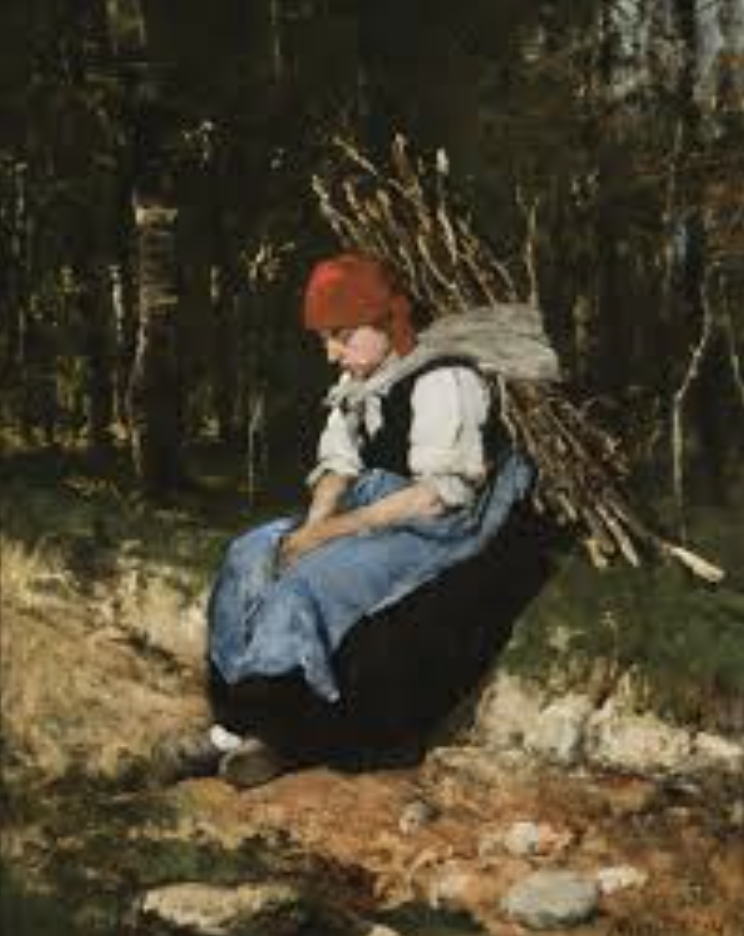
Image: Woman Carrying Twigs, Munkacsy, 19th C.
Weekly Bible Chapter: The Wood-Gathering Woman by Ezra W. Zuckerman Sivan


Published: November 03, 2026
Why is it important to know she was gathering wood? A study in inner biblical allusions.
The story of the “widow of Zarephath” (I Kings 17:2-24) illustrates how “inner-biblical allusions”-- linguistic and thematic references to earlier texts-- can both amplify the message of the text at hand and provide insightful commentary on the earlier texts.
As an example of amplification, consider how our chapter’s allusions to paradigmatic cases of kindness to strangers. By using the same language for “take a loaf of bread” and “take a bit of water” (as well as references to “flour” and “baked wafer”), the widow’s feeding of Elijah is linked to Abraham’s feeding the visitors (Genesis 18). And several other key words (“a bit of water;” “jug;” and “drink”) link the widow with Rebecca’s generosity to Abraham’s servant (Genesis 24). If we were not already amazed at how the widow selflessly shares food with Elijah when she and her son are dying of hunger, the references to Abraham and Rebecca clinch the fact that Elijah is in the presence of moral greatness.
Another example of amplification is the way the story of the widow evokes a paradigmatic example of faithfulness: Israel’s experience of the manna (in Exodus 16 and Numbers 11). Thematically, it certainly seems manna-like how the widow’s food is miraculously replenished, just as Elijah prophecies. There are tell-tale linguistic references here too (an unusual word for jar, as well as references to baked wafers and oil). The manna link serves to deepen our admiration for the widow—in this case for her faith that Elijah’s assurances that God will sustain them through the famine.
This link also affords insightful commentary on the manna episode itself. When we compare the manna and widow stories, we see that the widow does not complain until after her son dies of famine whereas Israel complains of famine when there was none (Exodus 16:3). We also see that she trusts that God will miraculously provide food whereas Israel worried at first that they needed to hoard the manna. The widow story thus shines a critical light on Israel’s behavior during the exodus and a favorable light on God’s generosity and patience.
Perhaps the deepest insights come from pondering how our chapter twice goes out of its way to describe the widow as gathering wood. The key word here, lekoshesh, is used in only three other occasions in the Hebrew Bible, and in only one other instance in reference to gathering wood: the case of the man who is put to death for gathering wood on the Sabbath (Numbers 15:32-36). This comparison illuminates the faithlessness of the wood gatherer: he should have assumed God would continue to provide wood. And it also points to his selfishness: if the widow can share her life-sustaining private property, he can refrain from “raiding the commons” while everyone else is resting.
By adding just a few additional words to link the two stories, we are led to marvel anew at the widow’s virtuous character and to appreciate the fragility of the social cooperation that sustains the Shabbat.
Ezra W. Zuckerman Sivan, a sociologist, is deputy dean of the MIT Sloan School of Management. Elaboration on ideas in this essay may be found in the essays “Between Shabbat and Lynch Mobs”; “How to Curtail Pernicious Social Competition: The Legacy of Zelophehad and his Daughters”; and “Why Do We Deserve God’s Favor?” published at the Lehrhaus online journal.
Avraham Norin shared this piece from one of this week's 929 many posts.
What is 929? Click on the link for more details: https://www.929.org.il/pages/aboutEN.html